A Sherwood & Sage Blog Post
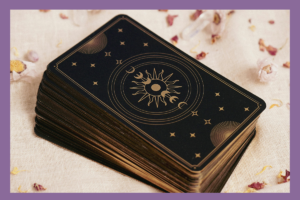
I want to be honest with you about something right away: my tarot practice is not dramatic.
There are no candles burning every night (sometimes, but not always). There is no elaborate altar setup or perfectly curated spread cloth. Most days it happens at the coffee table while dinner simmers on the stove, or right before I finally let myself sit down for the night. A cup of tea going cold beside me, a cat attempting to sit on the cards, and maybe five or ten minutes to actually be still before whatever comes next.
And somehow, after all this time, that is still the thing that has helped me most.
How I Got Here
II came to tarot sideways, the way a lot of people do. I was not looking for magic or mystery — I was looking for something to help me think. I was going through a hard stretch, the kind where you have too many feelings and not enough language for them, and someone suggested I try pulling a card in the evening just to give myself something to sit with.
So I did. And I kept doing it.
What surprised me was not that the cards were accurate or mystical or anything like that. What surprised me was that having one image, one symbol, one small thing to focus on gave my spinning brain somewhere to land. It felt like putting down a heavy bag I did not realize I had been carrying.
I use my own deck that has suits called Scythes, Stakes, Chalices, and Pentacles — it fits my particular kind of weird perfectly. But honestly the deck matters much less than the practice of actually sitting with it.
What an Evening Pull Actually Looks Like
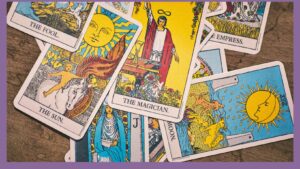
I do not always have a ritual. I want to be clear about that because I think people give up on tarot when they think they have to do it the “right” way.
Some evenings I shuffle three times, pull one card, and spend ten minutes with it, usually while something is cooking on the stove. Some evenings I pull a card right before I sit down to start whatever I am working on that night and only look at it properly later. Some nights it is late, right before bed, and I pull one card half asleep and be sure to note the card, so I can think on it when I’m more awake.
All of those count.
What I try to do — not always successfully — is pull before I am too tired to actually sit with it. Before the day is so fully closed that there is no room left to notice anything. That small window, whether it lands over a simmering pot or in the quiet right before sleep, is where the card has room to mean something.
I place the card where I can see it. I notice what my gut says before I look anything up. Then if I want context, I check my reference book or just sit with the imagery. I also note the card in my planner.
That is it. That is the whole thing.
The Questions I Ask
This is the part that changed everything for me.
I used to approach tarot with big questions. “What is my purpose?” “What should I do with my life?” The cards would answer and I would feel vaguely confused and a little disappointed.
Now I ask smaller, more honest things.
“What do I need to pay attention to today?”
“What am I avoiding?”
“What would it feel like to trust myself right now?”
“What does this season want from me?”
The smaller the question, the more room the card has to actually land somewhere useful. Tarot is not a fortune teller. It is more like a conversation partner that asks good questions back.
What the Cards Have Taught Me About Slowing Down
I did not expect this, but tarot has become part of how I practice slow living.
Not because pulling a card is slow (it takes five minutes), but because it asks me to be present. To look at something carefully. To sit with uncertainty instead of rushing to resolve it.
In a world that wants you to have answers immediately, having a daily practice that is entirely about sitting with questions is a quiet kind of rebellion.
The cards have also taught me that I already know more than I think I do. Most of the time when I pull something that feels significant, it is not telling me anything new. It is just reflecting back something I have been circling around without the words for it.
That is worth a lot.
How It Connects to Journaling
For me, tarot and journaling are almost the same practice — they just enter from different directions.
A card gives me an image to respond to. Journaling gives me space to follow that response wherever it goes. Together they make an evening practice that takes maybe fifteen minutes and leaves me feeling more settled before the day actually ends.
If you journal already and have been curious about tarot, I would honestly just suggest pulling one card and writing about what you notice. You do not have to believe anything in particular. You do not have to be spiritual in any specific way. Just notice what the card brings up and write it down.
See what happens.
A Few Books That Have Helped
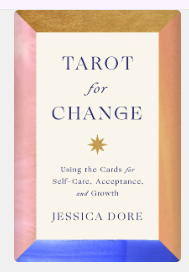
If you are curious about tarot and want somewhere to start that is not overwhelming, these are the books I actually reach for.


One Last Thing
My practice is mine. Yours will look different. That is not only okay — it is the point.
Tarot works best when it fits into your actual life, not a version of your life you are trying to perform. Start small. Stay curious. Let the cats sit on the cards sometimes.
It still counts.
Do you have a tarot or card practice? I would love to hear what it looks like for you. Drop it in the comments!