This post is for the people who give a lot.
The ones who feel other people’s emotions in their own bodies. The ones who leave certain conversations or certain rooms feeling scraped out and tired in a way that is hard to explain. The ones who notice everything, the shift in someone’s mood, the tension in a room, the unspoken thing underneath the spoken thing, and carry all of it whether they mean to or not.
The ones who are told they are too sensitive as if sensitivity were a flaw rather than a way of moving through the world that comes with its own particular gifts and its own particular costs.
If that is you, hello. I see you. I am you.
And I want to talk about self care in a way that is actually useful for people like us, because most of what gets called self care is not designed with us in mind.
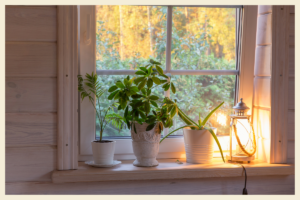
WHY STANDARD SELF CARE ADVISE OFTEN MISSES THE MARK FOR SENSITIVE PEOPLE
The self care industrial complex would like to sell you a bath bomb and call it healing.
And look, I like a bath. I am not anti-bath. But if you are a highly sensitive person, an empath, someone who carries anxiety in your body and absorbs the emotional weather of every room you walk into, a bath bomb is not going to touch what you are actually dealing with.
Standard self care advice tends to address surface tiredness. The kind of tired that comes from being physically busy and needing rest. That is real and valid and a bath or a nap or a massage genuinely helps with it.
But the tired that sensitive people carry is often something different. It is energetic tired. Emotional tired. The tired that comes from having your nervous system on high alert for long stretches of time. From feeling too much, too often, without adequate time or space to process and release it.
Surface solutions do not reach that kind of tired.
What does reach it is different for everyone but it tends to involve solitude, nature, creative expression, ritual, genuine rest rather than just the appearance of rest, and a consistent practice of returning to yourself after the many ways the world pulls you outward.
None of that is as photogenic as a bath bomb. All of it is more effective.
THE DIFFERENCE BETWEEN REST THAT RESTORES AND REST THAT JUST DELAYS THE CRASH
This is one of the most important distinctions I have learned and I wish someone had explained it to me earlier.
Not all rest is restorative. Some rest just puts a pause on the depletion without actually addressing it.
Scrolling through your phone for two hours is technically rest in the sense that you are not doing anything productive. But for most sensitive people it is not restorative because you are still taking things in. Other people’s energy, other people’s opinions, other people’s curated lives, the news, the noise. You are resting your body while continuing to flood your nervous system.
Watching television can go either way depending on what you are watching and how you are feeling. Sometimes it genuinely helps to lose yourself in a story for a while. Sometimes you finish a show and feel more anxious than when you started.
Socializing, even with people you love, is often not rest for empaths. It can be deeply nourishing and also genuinely tiring at the same time. Both things are true. The nourishment and the cost can exist together.
Restorative rest for sensitive people tends to look like: genuine solitude. Time in nature. Creative work that flows rather than strains. Sleep that actually happens rather than the lying-awake-worrying kind. Stillness without input. Time with animals, who ask nothing of you emotionally and give everything back.
Learning to tell the difference between the two kinds of rest is one of the most useful things you can do for yourself. Ask after any given activity: do I feel more like myself or less? That question will teach you more than any self care list ever could.

PROTECTING YOUR ENERGY WITHOUT BECOMING ISOLATED
This is the tension that most empaths and sensitive people live in and I do not want to pretend it resolves neatly.
You need people. Connection is essential and meaningful and part of what makes life worth living. And also, people are often the primary source of the depletion you are trying to recover from.
Both of those things are true at the same time and the balance between them is genuinely hard to find and keep.
What has helped me is thinking less about limiting time with people and more about being intentional about what I do before and after.
Before difficult interactions or crowded situations, I try to spend a few minutes being quiet. Grounding myself. Reminding myself of what is mine and what belongs to other people. Sometimes I do this consciously as a small ritual. Sometimes it is just making sure I have had ten minutes alone before I walk into something I know will cost me something.
After interactions that leave me feeling depleted, I try not to immediately fill the space with more input. I try to give myself a transition. A walk. A few minutes outside. A cup of tea in a quiet room. Something that signals to my nervous system that the thing is over and I am allowed to come back to myself now.
The goal is not to stop engaging with the world. The goal is to stop being so surprised every time engaging with the world takes something from you, and to build in the recovery time as a non-negotiable rather than an afterthought.
SMALL DAILY HABITS THAT GENUINELY HELP
I want to be specific again because I think specific is more useful than inspirational when we are talking about actually taking care of ourselves.
These are not revolutionary. They are quiet and small and they work when I do them consistently.
A morning that belongs to me before it belongs to anyone else. Even twenty minutes. Before the phone, before the news, before I am available to anything or anyone else. Tea. A card pull. A few minutes outside. Whatever it is, something that says: I exist before I am useful to the world.
Time with my animals every single day. Not incidentally, but on purpose. Sitting with a cat in my lap and doing nothing else for a while. This is not a small thing for me. Animals are one of the most genuinely restorative presences in my life and I think that is true for a lot of sensitive people. There is no performance required. No emotional management. Just warmth and presence and the particular peace of a creature who simply wants to be near you.
Creative work as self care, not as productivity. Making something with no goal attached. Drawing badly. Writing something just for me. Working with my hands on something tactile. When creative work is separated from the pressure to produce or perform or sell, it becomes one of the most genuinely nourishing things I know ho to do.
Being outside in some form every day. I have said this in other posts and I will keep saying it because I believe it deeply. Nature is regulating for the nervous system in a way that is not metaphorical. Something actually shifts when you spend time in in. Even a few minutes. Even a small urban garden or a patch of sky.
Choosing what I take in deliberately. What I read, what I watch, what accounts I follow, what conversations I participate in. Sensitive people are affected by input in ways that non-sensitive people are often not. The news does something to me that is more intense than what it does to some other people I know. Certain kinds of content leave me feeling worse about the world and about myself. I have gotten better at noticing that and making choices accordingly. Curating your input is not avoidance. It is maintenance.
WHAT TO DO WHEN YOUR TANK IS EMPTY
Because it will be. This is not a failure. This is just what happens when you are a person who gives a lot and lives in a world that asks for a lot.
The first thing is to stop adding to the depletion before you try to refill. That sounds obvious and it is much harder in practice than it sounds. When we are running on empty we often keep going anyway because we feel responsible, because stopping feels selfish, because the things that need doing do not stop needing doing just because we have nothing left.
But you cannot refill while the drain is still open.
So the first step is always: what can I stop, even temporarily? What can wait? What am I doing out of genuine necessity and what am I doing out of guilt or habit or the feeling that I should?
Next, what is the smallest possible thing that would help right now? Not the ideal restorative practice. Not the full version of what you would do if you had unlimited time and space. The smallest thing. Five minutes outside. One cup of tea made slowly. Lying on the floor and letting a cat sit on you. Whatever tiny thing is actually available to you in this moment.
Then, give yourself permission to not be okay for a little while. This is the one sensitive people are worst at. We are very good at taking care of other people and very bad at allowing ourselves to be in need of care. But you are allowed to be depleted. You are allowed to not have it together. You are allowed to need things.
Needing things is not weakness. It is just being alive.
SETTING LIMITS WITHOUT THE GUILT
I used to call this setting boundaries and then I noticed that the word boundaries had started to feel clinical and a little cold to me so now I just think of it as setting limits. The same concept, language that feels more like me.
Setting limits is one of the hardest skills for sensitive, empathic people to develop because we feel other people’s disappointment so acutely. When we say no to someone, we do not just experience our own discomfort at saying it. We also feel their reaction in our own bodies. We feel their disappointment or frustration as if it were happening to us.
Which makes saying no feel like it costs twice as much as it actually does.
Here is what I have found to be true after a lot of practice with this:
Other people’s reactions to your limits are not your responsibility to fix. You can care about someone and still say no to them. You can love someone and still protect your own energy. These things are not in conflict even when they feel like they are.
The guilt does not mean you did something wrong. It just means your nervous system is reacting to perceived threat the way it always does. Feel it, acknowledge it, and let it pass. It will pass.
And every time you set a limit and the world does not end, it gets fractionally easier to do it again. Not easy. Easier. The difference matters.

BUILDING A LIFE THAT NEEDS LESS RECOVERING FROM
This is the longer game and it is worth naming even though it is not a quick fix.
Most of the self care conversation focuses on recovering from the life you are living. And recovery is important and real and necessary.
But there is another question worth sitting with occasionally: is the life I am living one that a sensitive person can actually sustain?
That is a bigger question and a harder one. It involves looking honestly at your work and your relationships and your commitments and your daily rhythms and asking where the costs are coming from and whether any of them can be changed rather than just recovered from.
Some costs are unavoidable. Life asks things of us that we cannot negotiate away. But some costs are choices we have made or inherited or drifted into without fully deciding on them. And some of those can be changed.
I left a work situation that was taking more from me than it was giving. That was not a small decision and it was not without fear and it changed everything. I am building something now that is more aligned with who I am and how I am made. It is not without its own challenges and costs. But the costs are different. They do no leave me scraped out at the end of every day in the particular hollow way that the wrong environment does.
Not everyone can make that kind of change right now. I know that. But it is worth knowing that the option exists, that the question is worth asking, that you do not have to simply recover forever from a life that was never designed for someone like you.
You are allowed to design something different. Slowly, imperfectly, one small change at a time.
YOU ARE ALLOWED TO NEED THINGS
I want to close here because I think it is the thing sensitive people most need to hear and most rarely do.
Your sensitivity is not a problem to be managed. It is not a liability you need to compensate for or a weakness you need to overcome. It is part of how you are made and it comes with genuine gifts: depth of feeling, capacity for empathy, attunement to the world around you, creativity, intuition, the ability to notice what others miss.
It also comes with costs. And those costs are real and they deserve to be taken seriously, not dismissed with a bath bomb and a motivational quote.
You deserve actual care. Not the performance of self care. Not the Instagram version. Actual, honest, unglamorous, consistent tending of yourself and your nervous system and your particular needs.
You deserve a life that does not require you to constantly recover from it.
You deserve a rest that actually restores you.
You deserve to say no without guilt and to take up space without apology and to need things without shame.
You give a lot. That matters. And it is sustainable only if you also receive.
Start there. Start small. Start today if you can.
You are worth the same care you give to everyone else. Actually worth it. Not as a concept. As a fact.
What genuinely restores you, not what should restore you but what actually does? I would love to make this a real conversation. Tell me in the comments.
Melissa is the creator behind Sherwood and Sage, a slow living and creative brand built alongside her daughter Delphine. She writes about tarot, journaling, nature, and building a meaningful life from the inside out.