A Sherwood & Sage Blog Post
I was a journal kid before I was anything else.
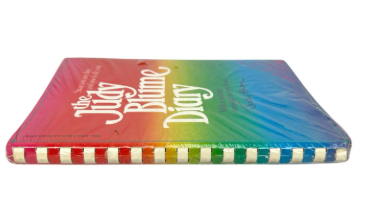
I had a Judy Blume diary, given to my by my great-grandmother. I wrote in it in pencil on purpose, so I could erase a line or an entire page and write it again until it felt right. I loved stickers. I loved fresh stationery. I loved the specific feeling of cracking open a brand new journal that did not have anything wrong in it yet. Some years I would find one of those dated, day-a-page journals under the tree at Christmas, and I looked forward to it the way other kids looked forward to toys.
Those journals taught me something I did not realize I was learning at the time. Most of the prompts were simple. Write one good thing about today. What are you grateful for. What happened that you want to remember. I was writing little gratitude lists before I ever knew that was a thing with a name. I never wanted to stop using that journal.
Then I grew up, and somewhere along the way, journaling stopped being easy.
The Version I Thought I Had to Do
As an adult, when I tried to pick it back up, I assumed I had to do it a certain way. The version other people seemed to do. Sit down with a blank page and just write. Get it all out. Brain dump until something useful surfaces.
I have a lot of thoughts. Journaling that way just meant pouring all of them onto a page in whatever order they showed up in, and closing the notebook feeling more tangled than when I opened it. It was not grounding. It felt like homework I had assigned myself, and I was bad at doing it consistently, and it was hard to even find the time to sit down and stare at nothing before the words came.
The version of journaling I thought I was supposed to do was too open. Too shapeless. Too much like performing wellness for an audience of one.
What Changed When I Stopped Trying to Brain Dump
The shift happened when I stopped trying to recreate a blank page and instead let myself go back to what actually worked for me as a kid, which was structure. A prompt. A small, specific nudge instead of an open field.
I do not want to sit down and empty my whole head onto paper anymore. That is not resonating for me right now, and it does not have to. What resonates is a question that points me somewhere. One good thing about today. What am I actually feeling underneath the noise. What am I proud of, even quietly. A prompt gives my thoughts a place to land instead of asking them to organize themselves.
It turns out that is not a lesser version of journaling. It is just the version that was always mine.
What I Actually Write (And What I Do Not)

This might be helpful if you are someone who stares at a blank page and does not know where to start, or someone who used to journal easily and finds it harder now.
I do not free write anymore. I do not sit down hoping the page will tell me what to say. I use a prompt, almost always, even if it is a simple one I make up on the spot. What is one good thing about today. What do I need right now that I have not said out loud. What am I proud of this week, even if it is small.
I do not write every day. I do not fill the pages in order. I write when a prompt catches me at the right moment, and I let the answer be three sentences or ten words. It does not need to be more than that to count.
A Few Prompts to Start With
If you loved journaling once and it has gotten harder to return to, or if you have never really taken to a blank page, these are the kind of prompts that I actually use. You only need to answer one. And you can write as many sentences that you want.
- What is one good thing about today, even a small one?
- What am I actually feeling right now, underneath everything else?
- What am I proud of this week that I have not said out loud?
- What do I wish someone would ask me about?
- What has this week asked of me, and did I give it willingly?
There are no right answers. There is no grade. A prompt is just a door. You only have to walk through it a little.
What Actually Changed
I want to be careful here not to make this sound like journaling fixed everything. It did not. There are still weeks where the journal sits untouched and I do not push myself about it.
But here is what I noticed once I let go of the version that was not working for me.
I got better at knowing what I actually felt, not just what I thought I should feel. I started to notice patterns, the same worries circling back, the same small things bringing me back to myself. Seeing them on paper, even in a few sentences, made them feel less permanent and more like weather, something that moves through rather than something I am stuck inside.
Journaling did not solve my problems. It helped me notice them more clearly, a few sentences at a time. And sometimes that is exactly what you need.
You Do Not Have to Start From a Blank Page
This is the thing I most want someone to hear if they used to journal and quietly stopped, and have felt a little guilty about it since.
A blank page is not a requirement. Needing a prompt is not a lesser way to do this. It is not undisciplined or unserious to want a little structure. Some of us were never going to be the kind of person who wakes up and free writes three pages before coffee, and that is completely fine.
Your journal will never be read by anyone unless you want it to be. It does not have to be a lot. It just has to be honest.
That is the whole bar.
The Journal I Actually Reach for Now
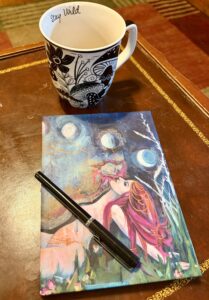
My current favorite is the journal above. The image makes me feel powerful and inspired. A childhood friend did the illustration and you can find her work and items here.
You can also visit my Bookshop.org shop and search for journals. A great alternative to the big online stores. There are so many to choose from!
I still love a fresh notebook the way I did as a kid, but these days I reach for something with prompts already built in more often than a blank one. It scratches the same itch that those dated Christmas journals did all those years ago, just for the person I am not instead of the person I am now instead of the person I was at thirteen.
Were you a journal kid too? Did you keep it up, or did it get harder somewhere along the way? I would genuinely love to hear where you are with it, drop a line in the comments.